

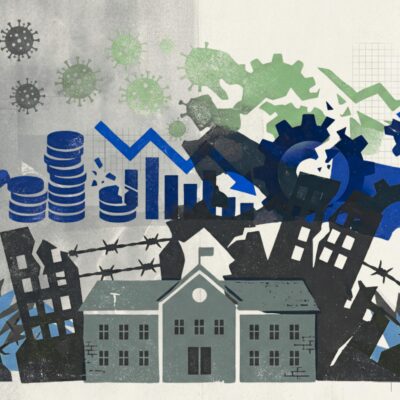
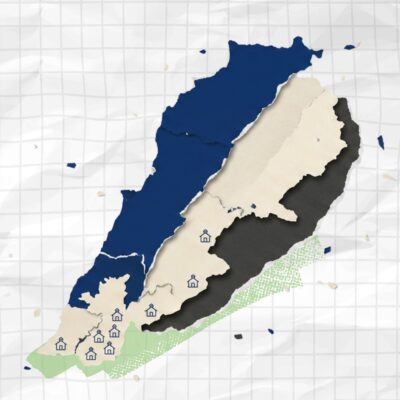




Lebanon currently hosts approximately 610,000 registered Syrian refugee children and youth (ages 3–24), according to UNHCR data as of December 2025. The Central Administration of Statistics (CAS), through its Multiple Indicator Cluster Survey (MICS 2023), further highlights stark disparities in access to education across governorates, particularly in Akkar, Bekaa, and North Lebanon, where refugee settlements are concentrated. Despite international and national pledges, nearly half of this population remains excluded from the formal education system, raising the specter of a “lost generation.”
Scale of the Crisis
- Demographics: Out of 610,000 refugee youth, 44% of those aged 6–17 are not attending school. CAS data shows that enrollment rates vary regionally, with Bekaa reporting the lowest participation among refugee children.
- Youth Marginalization: Among older youth (15–24), 35% have never attended school, and 59% are NEET (Not in Education, Employment, or Training).
- Educational Levels: UNHCR reports that only 50% of children aged 6–14 are enrolled in primary education, 15% in secondary, and 10% in higher education.
Barriers to Education
According to VASyR 2025 and CAS regional surveys, the primary pillars of exclusion include:
| Barrier | Impact Percentage |
| Transportation Costs | 30–35% |
| Educational Materials | 27–33% |
| Registration Refusal | 11% |
| Child Labor Pressures | 9% (70% of working children out of school) |
Beyond financial constraints, a chilling systemic barrier has emerged: school registration data is reportedly shared with Lebanese internal security forces, instilling fear among families lacking legal residency. Parents increasingly keep children home to avoid risks of detention or deportation.
Funding GapsWhile the Lebanese government pledged in October 2025 to rehabilitate the public school system, implementation has stalled. UNICEF reported receiving only 33% of the $50 million required to address immediate needs, leaving schools under-resourced and unable to absorb refugee students
Societal and Developmental Consequences
Exclusion from classrooms triggers cascading risks:
- Exploitation: Higher rates of child labor and early marriage.
- Economic Stagnation: Entrenched poverty and dependency on aid.
- Social Cohesion: Widening inequalities between Lebanese and Syrian children, fueling localized tensions.
- Pathways Forward
- Enforce policies allowing non-national enrollment.
- Decouple school registration from security surveillance.
- Implement Accelerated Learning Programs (ALP).
- Scale NGO-led literacy and numeracy programs.
- Develop accredited vocational training pathways.
- Link apprenticeships with local businesses
Conclusion
The situation for Syrian children in Lebanon remains critical. CAS data underscores regional disparities, while UNHCR and VASyR highlight systemic barriers. Preventing a “lost generation” requires shifting from emergency response to sustainable investment in Lebanese infrastructure and refugee-specific educational pathways prioritizing safety, anonymity, and equitable access.
Regional Enrollment Rates of Syrian Refugee Children in Lebanon (CAS & UNHCR Data, 2023–2025)
| Governorate | Refugee Children (ages 6–17) | Enrollment Rate | Out-of-School Rate | Key Barriers (CAS Survey) |
| Bekaa | ~180,000 | 42% | 58% | Transport costs, child labor |
| Akkar | ~95,000 | 45% | 55% | Lack of materials, registration refusal |
| North Lebanon | ~110,000 | 48% | 52% | Security fears, overcrowded schools |
| Mount Lebanon | ~75,000 | 55% | 45% | Fees, limited double-shift capacity |
| South Lebanon | ~60,000 | 60% | 40% | Distance to schools, early marriage pressures |
| Beirut | ~20,000 | 65% | 35% | Documentation issues, stigma |
Key Insights
- Bekaa and Akkar are the most vulnerable regions, with more than half of refugee children out of school.
- Beirut and South Lebanon show relatively higher enrollment, but systemic barriers persist.
- CAS data confirms that regional inequalities are a major driver of exclusion, compounding financial and security-related fears.
References
- VASyR 2025 Key Findings
- UNHCR Lebanon – Education Data (2025)
- Human Rights Watch (2025): Lebanon Restricts Education Access for Many Refugees
- Central Administration of Statistics – MICS 2023
